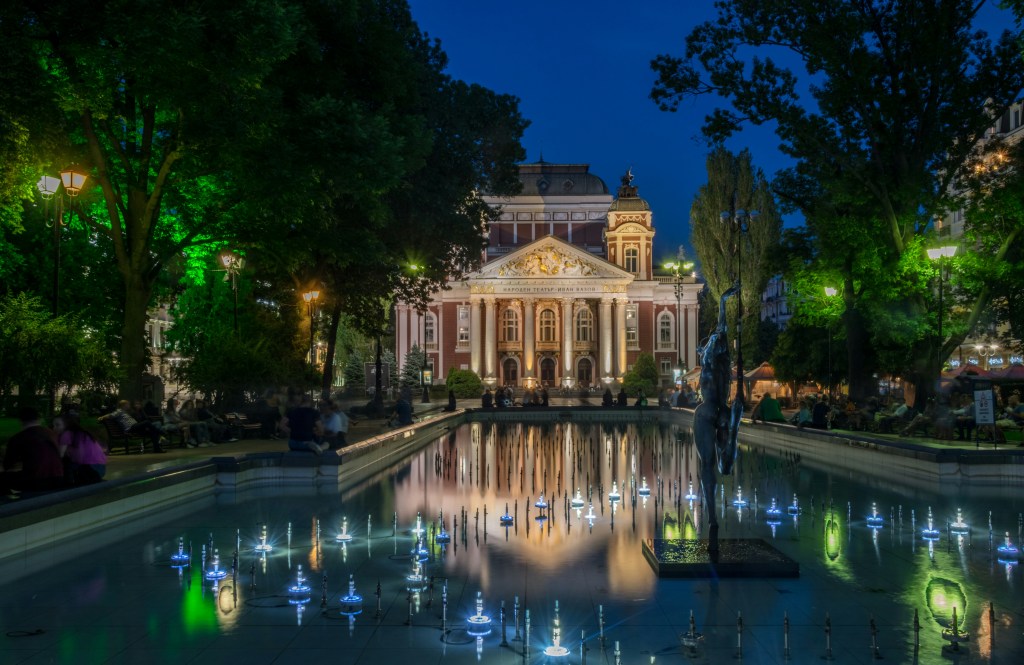
Bulgaria is a land of cultural richness, historical drama, and incredible creativity. Because of its location on the far east end of Europe, sandwiched between Greece and Romania, with the former Yugoslavian states to the west, this country has definitely seen both action and defining moments in the course of European history. All of these elements have combined to create a unique Bulgarian literary tradition. Here’s a brief overview of how Bulgaria’s history has formed its literature:
New Alphabets from Old Saints
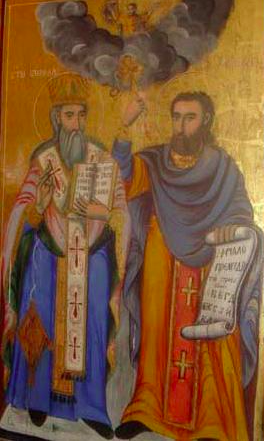
The ninth to eleventh centuries in Bulgaria were times of great literary development, largely due to the work of two brothers, Cyril and Methodius. These two men were born in Thessalonica, in modern Greece. They translated the Bible from Byzantine Greek into Slavonic, which greatly facilitated the spread of Christianity in the region.
Cyrial and Methodius were invited to Moravia (in the current Czech Republic) to preach the gospel in Slavonic, the predecessor of Czech, Bulgarian, and other slavic languages, and did so, gaining many slavic converts. For their Biblical translation, Cyril and Methodius created the Glagolitic alphabet, forerunner to the Cyrillic alphabet which is still used for Bulgarian and other Slavic languages today.
Cyril and Methodius, from Wikipedia Commons
After a rift with western, Latin-speaking branches of Christianity, disciples of Cyril and Methodius were exiled from Moravia and welcomed into Bulgaria. With their arrival began the Golden Age of literature in Bulgaria, where many old texts of Byzantine Greek were translated into Cyrillic Bulgarian, and new texts–mainly religious in nature–were also created. These texts influenced the Slavic world as they spread from Bulgaria into what is now Serbia, Croatia and Ukraine in the forms of Old Church Slavonic, Glagolithic, and Cyrillic texts. This prolific creation and distribution of Bulgarian texts began to decline as Turkish invaders brought in the rule of the Ottoman Empire in 1018.
A Detested Overlord
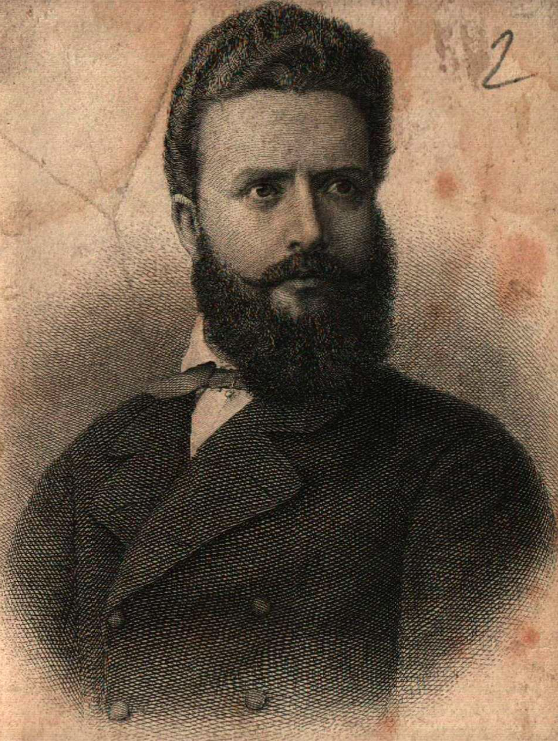
Hristo Botev, from Wikipedia Commons
Five centuries of Ottoman rule kept the Bulgarians mostly cut-off from the Renaissance ideas of Western Europe. During this time, literature in Bulgarian mainly took the form of religious texts created in monasteries that remained as bastions of Bulgarian culture, or in the form of poetry and fairy-tales. Ethnic Bulgarians resented their Turkish overlords, and by the early 19th century, some Bulgarian literature took a revolutionary stance, calling for an overthrow of Turkish rule. This is especially evident in the writings of Vasil Drumev, Rayko Zhinzifov and Dobri Chintulov. Hristo Botev, perhaps the most celebrated Bulgarian poet in the world, was also revolutionary in his themes and passionately used existing folklore to raise questions about the status quo. These writers and others engaged in revolutionary activities, and while condemning their oppression they celebrated traditional culture in the form of folk stories and folk songs.
Almost Free!
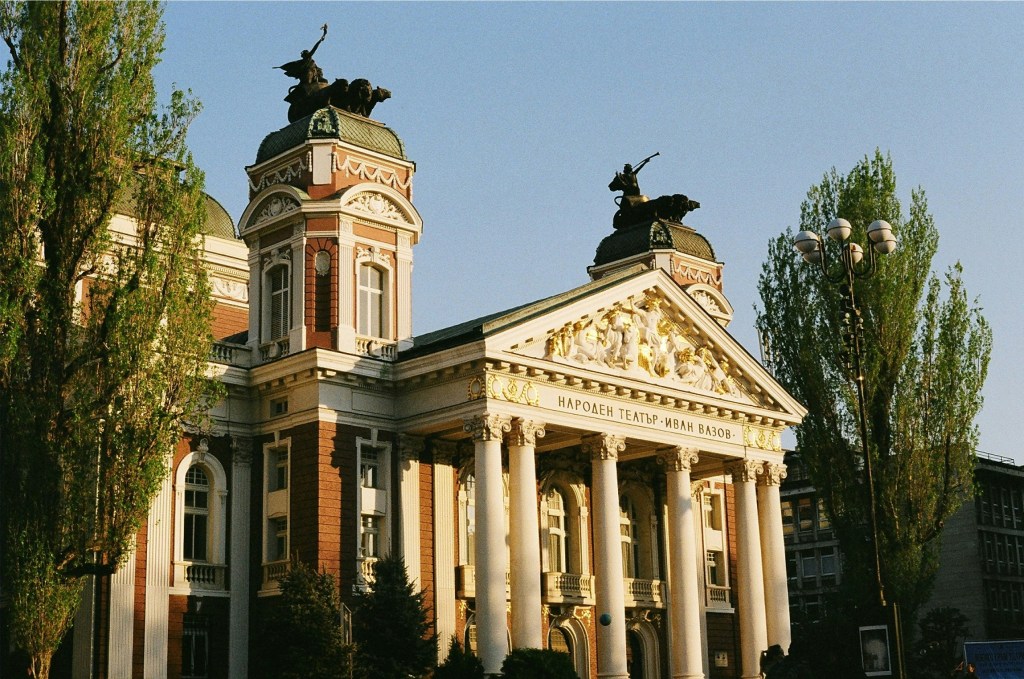
The Russo-Turkish War between 1877-1878 brought Bulgaria freedom from Turkish rule, but they were still under the auspices of Russia. At this time Bulgaria was able to form a new Bulgarian Church and a national education system, and many ethnic Bulgarians who had fled abroad began to return to their homeland. This period is considered to be the Bulgarian Renaissance during which Bulgarian literature turned from revolution to pastoral and regional themes. One of the most famous writers in this period, and of Bulgarian literature as a whole, is Ivan Vazov, who wrote both poetry and prose, as well as dramas. His most famous work is Under the Yoke (1893), which documents Bulgarian experience under Ottoman Rule. The Bulgarian National Theater in Sofia bears his name.
The Modern Bulgarian
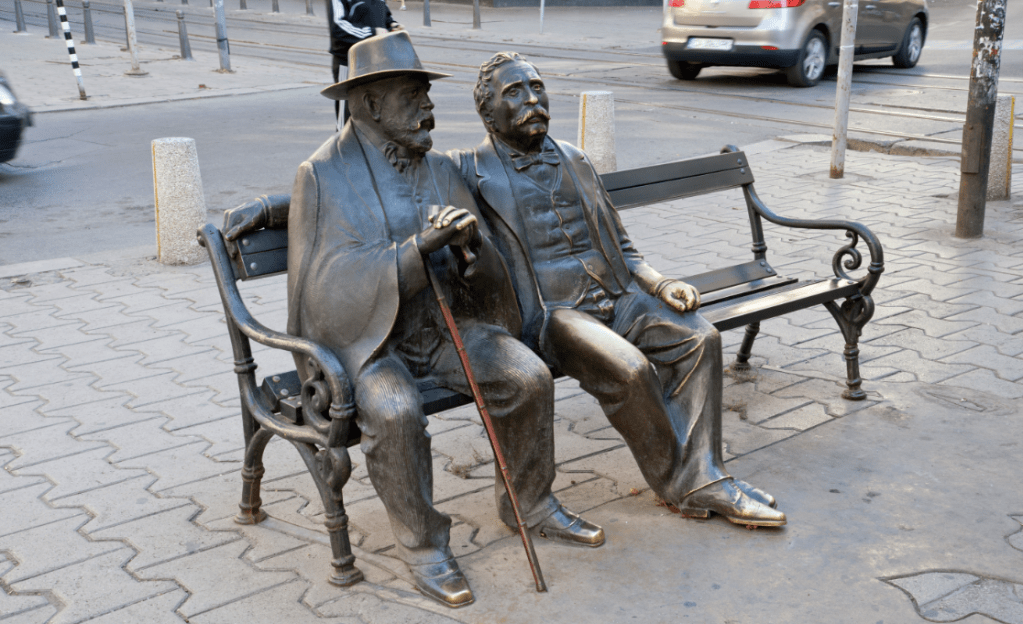
Statue of Pencho Slaveykov (wearing hat) in Sofia, Bulgaria. Bin im Garten, CC BY-SA 3.0 https://creativecommons.org/licenses/by-sa/3.0, via Wikimedia Commons
The Bulgarian Renaissance poet Petko Slaveykov had a son who was also a poet: Pencho Slaveykov. Pencho brought Bulgarian literature into the modern arena by combining it with European philosophy and metaphysics. He still drew on the traditional images and themes of Bulgaria, but synthesized it into something new. Together with poets and thinkers Petko Todorov, Krastyo Krastev and Peyo Yavorov, Slaveykov created the modernist group of thinkers Misal (Thought). Petko Todorov wrote powerfully modern dramas and a series of stories called Idylls, based on Bulgarian folklore. Quite a lot of Bulgarian poets at this time followed the influence of French and Russian symbolism, searching for ways to understand life and the world in a new, modern context.
Between Empires and Ideologies
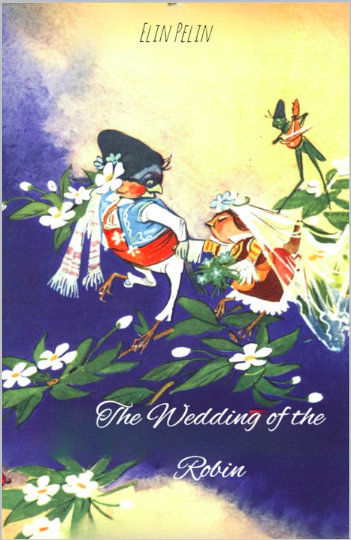
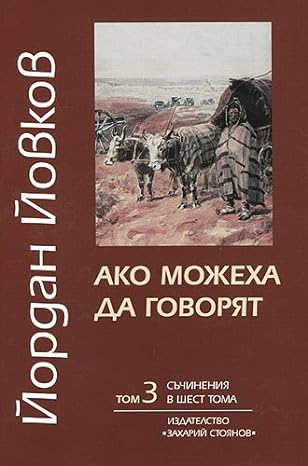
The time between the World Wars was one of great tumult and social and political changes in Bulgaria, as in other parts of the world. A number of popular Bulgarian poets died very young. Literary genres shifted along with the socio-political climate, and new ways of thinking were being synthesized. Geo Milev (1895–1925) started a modernist magazine called Vezni (Scale) in Sofia, in which he included his translations of stories as well as poems, theatre reviews, and even his own paintings. With these he skillfully combined modernist ideas with traditional themes and experimental language. He too died at the early age of 30.
The stories of Elin Pelin (1877–1949) and Yordan Yovkov (1880–1937) were especially influential at this time. Their works were widely read in Bulgaria and beyond. Following the genre of realism, they both wrote about rural life. Yovkov wrote about traditions and myths, while Pelin wrote lighter, more humorous pieces and books for children. The writings of both were dramatic and elaborate.
The historical novels of Fani Popova-Mutafova gained popularity just before World War II, but unfortunately the Communist regime repressed her works thereafter. The humorous writer and painter Chudomir (1890–1967) was more successful over the long term with his highly original short stories. He spent much of his life as a teacher and also served as director of the Iskra Library and Ethnographic Museum under Communist rule.
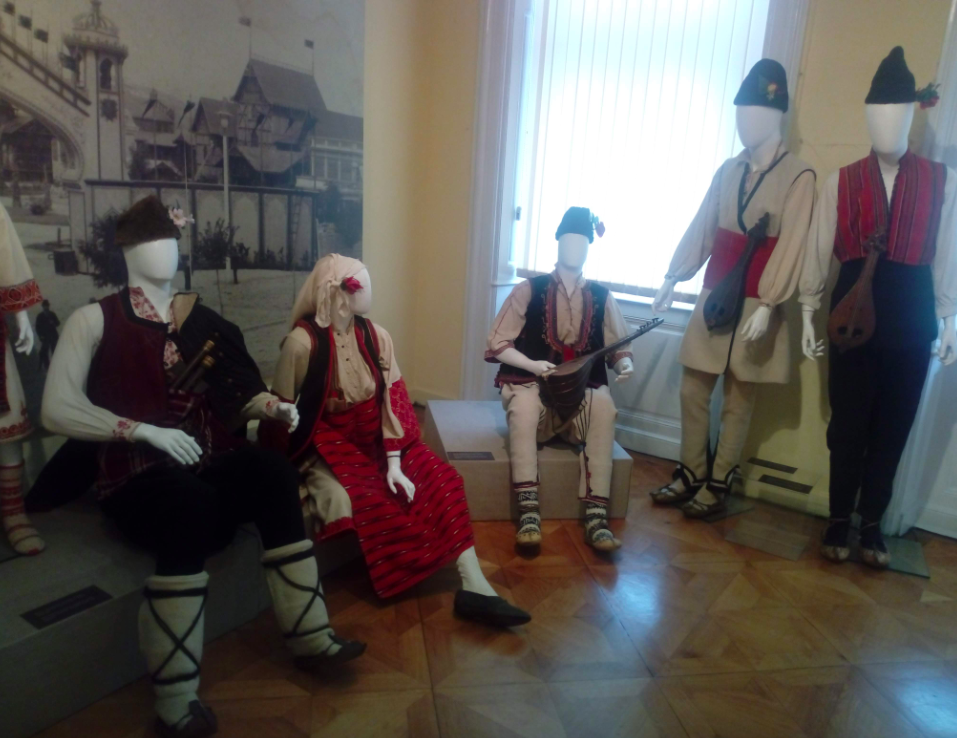
Exhibit in the Bulgarian Ethnographic Museum in Sofia. Photo by Savannah Rivka Powell, CC BY-SA 4.0 https://creativecommons.org/licenses/by-sa/4.0, via Wikimedia Commons
Repressed Expression
After 1944 Bulgaria came under Communist rule, which was highly censored. The Bulgarian government pushed for works to conform with Social Realism and a perspective of history that coincided with the Socialist viewpoint. Because of this, a few genres such as crime fiction and science fiction all but died. Some writers had to rewrite or adapt their work to meet the Socialist criteria. Others wrote stories hidden in allegories so they could express their true feelings without fear of censure or emprisonment. Anton Donchev, Yordan Radichkov, Emiliyan Stanev, Stanislav Stratiev, Nikolay Haytov, Ivailo Petrov and Vera Mutafchieva are writers who succeeded in publishing their works during the Communist era. Their works of fiction form the basis of modern Bulgarian literature. Poetry continued to be written in large supply, with thousands of collections being published after the political changes of both 1944 and 1989.
The Capitalist Chapter
Following the demise of Communism in 1989, Bulgarian writers enjoyed an upsurge of publishing, both of private and state-sponsored writing. Much of the fiction produced in this time has been experimental as these writers have edged away from the previously imposed Socialist agenda.
The French-Bulgarian novelist Julia Kristeva has become known as a prominent Bulgarian writer on the world stage in recent years. Working in Paris as a philosopher, literary critic, semiotician, psychoanalyst, feminist, and novelist since 1960, she still lectures occasionally at Columbia University in New York.
Other Bulgarian poets and writers from former generations continue in popularity today, such as Konstantin Pavlov, Boris Hristov, Ekaterina Yosifova, Dobromir Tonev, Edvin Sugarev, Ani Ilkov, Georgi Gospodinov, Iana Boukova and Kristin Dimitrova. Their works are mainly appreciated within Bulgaria, but a few, such as Georgi Gospinov who won the International Booker Prize in 2023 for his new novel Time Shelter, have gained international acclaim. Watch the video below to see an interview with Georgi Gospodinov and Angela Rodel to learn about this fascinating book, and how it fits into the context of Bulgarian literature:
If you’d like to learn more about the literature and culture of the different parts of Europe, follow us on our blog through our newsletter, via our YouTube channel, or on Facebook or Instagram. We’d love to have you join us as we Travel Europe Through Books!


 Travel Europe Through Books
Leave a comment